Boook: Speech Learning Stories
AG Softworks LTDEducational
0.00.00 Reviews
- Version
- 3.4.1
- Installs
- 50.00K
- Age Rating
- Everyone
Screenshots
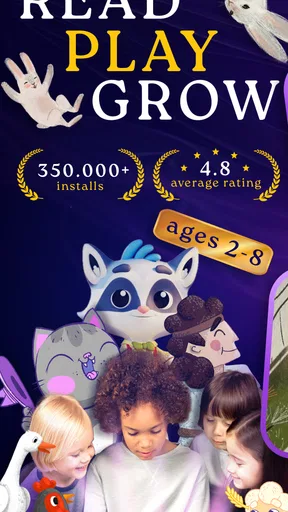
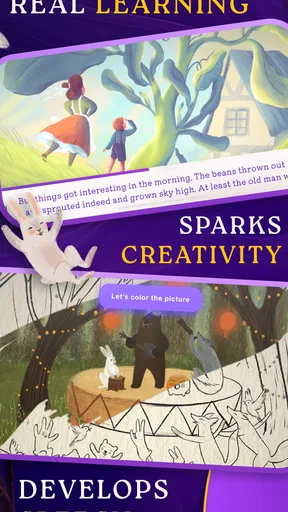
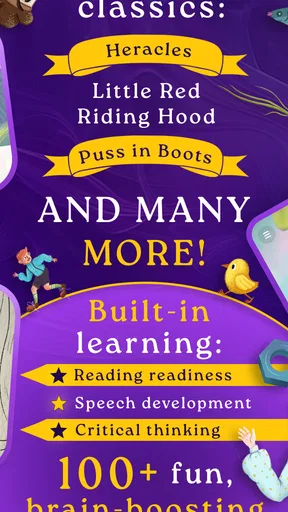
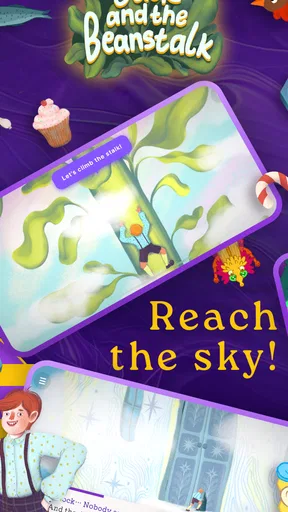
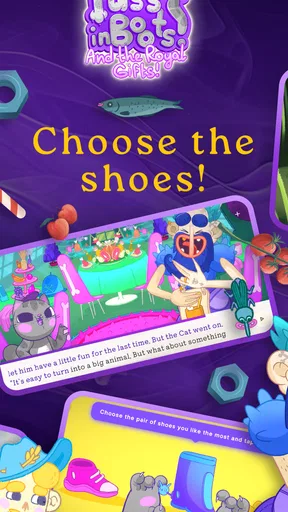
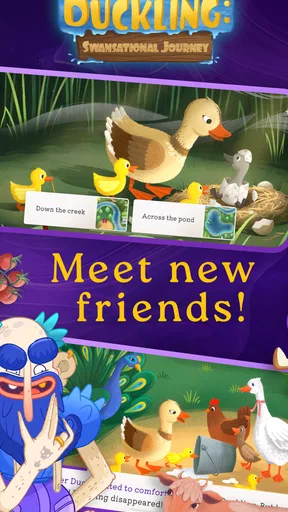
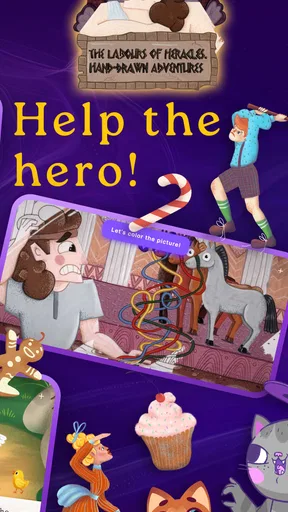
Our Review of Boook: Speech Learning Stories
 Analysis by Appyee
When I first opened Boook: Speech Learning Stories, I understood its appeal almost immediately: it turns early reading practice into something that feels closer to playtime than a worksheet. This is an educational game from AG Softworks LTD, aimed at children who are beginning to connect sounds, letters, and spoken language. The idea is simple, but the execution matters because young learners quickly notice when an activity feels like a lesson disguised as entertainment.
My overall impression is positive, especially for families looking for a gentle way to add speech and phonics practice to the day. The app combines learning games with books, so it can fit both a short practice session and a quieter reading routine. I would not treat it as a complete replacement for an adult reading with a child, though. Its best role is as a repeatable supplement: something a child can return to between shared reading, conversation, and other hands-on activities.
What the first week feels like
The first few sessions are likely to be the strongest part of the experience. Children usually respond well when a learning task has an immediate story context, and the book-based format gives the phonics work a reason to exist. Instead of presenting sound practice as an isolated drill, the app frames it around speech and reading. That can make the first introduction less intimidating for a child who becomes frustrated by conventional reading exercises.
I especially like the possibility of using it in small portions. A child does not need a long lesson to benefit from hearing sounds, attempting responses, and seeing how reading activities connect with stories. For a parent, this makes it easier to place the game into an ordinary routine: a few minutes after breakfast, a calm activity before dinner, or a short wind-down before a bedtime book.
The app is free to install, which lowers the barrier to trying it. It is rated for Everyone, and its minimum operating-system requirement is version 10, so families using a reasonably current device should find the starting point straightforward. There are in-app purchases ranging from about five dollars to around forty dollars per item, so I would make the purchase decision with the child rather than leaving it to an accidental tap during an enthusiastic session.
One useful first-week approach is to avoid treating every activity as a test. I would sit nearby at the beginning, listen to how the child responds, and notice whether the story elements or the speech practice hold attention longer. That observation tells you how to use the app well. If the child enjoys the story but rushes through the sound work, keep sessions short and talk about the sounds afterward. If the child likes repeating speech activities, let that become the main entry point before expecting independent reading.
The most important early benefit is not speed. It is familiarity. A child begins to see that spoken sounds, written words, and stories belong together. That connection can be hard to create with flashcards alone. At the same time, parents should remember that an app cannot always tell whether a child is guessing, repeating a sound mechanically, or genuinely understanding the relationship between letters and speech. A little adult attention during the first week prevents the game from becoming background noise.
Where it fits beside ordinary reading practice
Compared with alphabet videos, this game has a more active purpose because the child is expected to participate rather than simply watch. Compared with paper phonics worksheets, it is more inviting for children who resist writing or become discouraged by visible mistakes. Compared with a standard digital library, it appears more focused on the bridge between speech and early reading rather than only presenting finished stories.
That does not make it superior in every situation. A printed book gives a child a better sense of page handling, and an adult can adjust explanations instantly. A teacher or specialist can also hear subtle pronunciation difficulties that software may not address. I would use this app when I want extra repetition and motivation, not when I need a full literacy curriculum or a professional assessment.
A realistic weekday routine might look like this: after school, a child spends a short period with one learning activity, then tells a parent one sound or word that appeared. The parent follows with a paper book or points out the same sound in a label at home. This two-step routine is more valuable than letting the game stand alone because it moves the skill from the screen into daily language.
Why the value may or may not last beyond the novelty
The first-week question is whether the child enjoys the format. The month-to-month question is harder: does the app continue to provide a reason to return? For me, the answer depends heavily on how the family uses it. Speech and phonics practice benefit from repetition, but repetition becomes tiring when every session follows the same rhythm and the child feels they are merely replaying a task they have already mastered.
The book element gives the experience a better chance of lasting than a collection of disconnected mini-games. Stories provide context, and context can make practice feel less disposable. A child may return because they want to revisit a familiar story, while the parent uses that interest to reinforce sounds and reading habits. That is a more sustainable pattern than asking a child to open the app solely because they “need” more practice.
I would recommend setting a modest recurring schedule rather than relying on enthusiasm. Two or three short sessions spread across a week are more realistic than a long session followed by several days of avoidance. The goal is to make the app predictable without making it compulsory. If a child begins to associate it with pressure, its strongest advantage—its playful approach—starts to disappear.
Another practical tip is to alternate independent use with shared use. Let the child explore a familiar activity alone, but occasionally sit together and ask what a character said, which sound stood out, or what happened in the story. This turns passive repetition into conversation. It also helps a parent decide whether the child is progressing or simply tapping through familiar screens.
The current version is 3.4.1, and the game has passed fifty thousand installs. Those details suggest that it has found an audience, but they do not by themselves prove that it will suit every learner. What matters more is whether the app matches the child’s stage. A beginner who needs encouragement may gain a lot from the playful structure. A child already reading comfortably may outgrow the core challenge and need richer books, writing practice, or more advanced comprehension work.
That is the main long-term trade-off. The app can help establish a habit, but it cannot create unlimited depth on its own. Parents should reassess every few weeks: Is the child still encountering something useful? Are they becoming more confident with sounds? Are they transferring anything to books and conversation? If the answer becomes no, keeping the app installed out of habit is not the same as maintaining a productive learning routine.
How to prevent practice from becoming mechanical
I found that the most effective use is to give each session a small purpose. One day might focus on listening carefully to speech. Another might emphasize recognizing a sound in a word. A later session could end with the child finding that sound in a physical book. The app supplies the starting point, while the adult supplies the connection to real reading.
This approach also helps with children who want to rush. Rather than correcting every response, pause after an activity and ask the child to explain what they heard. If they cannot explain it, repeat the activity more slowly or move to a story conversation. The aim is not to maximize completed screens; it is to build accurate listening and recognition.
For siblings, I would avoid turning the game into a competition. Early literacy develops unevenly, and comparing one child’s speed with another’s can make both learners less comfortable. A better use is to let each child choose an appropriate moment or story, then celebrate careful listening and persistence rather than the number of activities completed.
Families should also decide how the purchase system fits their routine before regular use begins. Since optional items can cost from roughly five dollars to nearly forty dollars each, I would review what is available with the adult account holder and establish a clear rule for children. The free starting point is useful for judging fit, but a family should not assume that every future part of the experience will be included without an additional purchase.
Maintenance, friction, and reasons children may tire of it
The maintenance burden is not technical so much as behavioral. The app needs a place in the family schedule, an adult willing to check in occasionally, and a clear limit on session length. Without those pieces, it may become another icon that receives intense attention for a few days and then disappears. That is not a flaw unique to this game, but it is especially relevant for educational products because their value depends on repeated, purposeful use.
Parents may also need to manage expectations around pronunciation. Speech learning is personal, and children can have accents, developmental differences, or speech patterns that make a simple right-or-wrong interaction feel inadequate. If the child is receiving support from a teacher or speech professional, I would use the app as an extra practice tool and follow the professional’s guidance rather than assuming the game can identify or correct every issue.
Another possible source of fatigue is the gap between entertainment and learning. A child may enjoy the characters or story setting but lose interest when the same type of sound practice returns. That is why I would watch for signs of automatic tapping, guessing, or asking to skip. When those signs appear, switch from independent play to a shared story, shorten the session, or take the sound into an offline activity.
Children who need extensive writing practice may also find the experience incomplete. Speech and phonics are important foundations, but handwriting, spelling, vocabulary, comprehension, and conversation require different kinds of work. A parent choosing this game should see it as one part of a reading environment, not as a single solution for every early-literacy need.
There is also a fit issue for children who dislike guided digital activities altogether. Some learners concentrate better with magnetic letters, paper cards, physical books, or an adult telling a story. If a child consistently resists the screen format, insisting on it because it is educational may damage the routine more than it helps. In that case, the better choice is the medium the child will use attentively.
On the other hand, the app can be particularly helpful during awkward gaps in the day. A family waiting for an appointment, traveling, or managing a rainy afternoon may want a contained activity that is more purposeful than random video viewing. I would still keep the session bounded and follow it with conversation or physical reading, but that convenience gives the game a practical role beyond its novelty.
Who should keep it installed
I think it is a good match for parents of young children who are beginning phonics work and need a friendly way to encourage regular practice. It is also suitable for families who want stories involved in the process rather than relying only on isolated letter drills. The Everyone age rating makes it broadly approachable, although the right level still depends on the individual child’s reading and speech development.
It is less suitable for someone seeking advanced reading comprehension, a structured classroom replacement, detailed progress reporting, or intensive speech therapy. I would also hesitate to recommend it as the only literacy activity for a child who is already reading independently. At that stage, a richer selection of physical and digital books may offer more lasting challenge.
The developer, AG Softworks LTD, has positioned this as a children’s educational game rather than a conventional reading textbook. That distinction matters. Its strength is the invitation to participate, repeat, and connect sounds with stories. Its weakness is that playful practice still needs adult judgment around level, pacing, and transfer to real-world reading.
For a parent wondering whether purchases are necessary, my advice is to begin with the free experience and observe the child’s behavior before spending anything. Do they return voluntarily? Do they talk about the stories? Do they recognize a sound later away from the device? Those are better signs of value than simply asking whether they finished an activity. If the app becomes a useful part of the routine, an optional purchase may make sense; if not, paying more will not solve a basic mismatch.
My long-term verdict
After the initial excitement fades, Boook: Speech Learning Stories earns its place best as a short, recurring practice companion. I like its focus on speech, phonics, games, and books because those elements can support one another when an adult helps the child make the connection. The experience is approachable, free to begin, and easier to fit into a busy day than a formal lesson.
Its lasting value depends on maintenance. Keep sessions brief, revisit stories without demanding performance every time, and connect the sounds on screen with printed words, conversation, and shared reading. Those habits prevent the app from becoming a repetitive tap-through exercise. They also make it clear when the child has outgrown the material or needs a different kind of support.
I would recommend giving it a fair trial to families with early readers who enjoy interactive stories and need encouragement with phonics. I would not recommend relying on it alone, and I would skip it if the child learns better through physical materials or needs specialized speech instruction. The strongest reason to keep it is not novelty; it is the possibility of making small, regular practice feel approachable.
In the end, this game works when it occupies a modest, well-defined space in a broader reading routine. Used that way, it can help a child return to sounds and stories often enough for confidence to grow. Used as a substitute for books, conversation, and adult guidance, it will feel limited. The lasting benefit comes from the habit built around the app, not from the screen time by itself.
Verdict
Strengths of Boook: Speech Learning Stories
- Short stories make daily speaking practice feel engaging and manageable.
- Useful vocabulary is introduced through realistic conversations and situations.
- Audio playback helps learners improve pronunciation and listening comprehension.
- The story-based format provides context instead of isolated word lists.
- Suitable for self-paced learning during commutes or short breaks.
Limitations of Boook: Speech Learning Stories
- Some lessons may feel too easy for advanced language learners.
- Progress can depend heavily on consistent daily practice.
- Speech recognition may misjudge accents or unclear microphone recordings.
- The available story selection may feel limited after extended use.
- Certain features or learning content may require a paid subscription.
Similar Picks in This Category
View All
Little Panda Policeman
BabyBus4.0

Monster Trucks Game for Kids 2
Raz Games4.1

Little Panda's Chinese Recipes
BabyBus4.4

Little Panda's Restaurant
BabyBus4.4

Little Panda's Ice Cream Games
BabyBus4.3

Baby Panda Care
BabyBus3.8
Frequently Asked Questions
What is Boook: Speech Learning Stories and who is it designed for?
Boook: Speech Learning Stories is an educational reading app built around interactive stories that help children practice speech, language, listening, and early reading skills. It is primarily intended for young learners, although the exact age range may depend on the child’s development and the content available in the app. Parents, caregivers, and educators can use it as a supplementary learning tool rather than a replacement for professional speech therapy or structured instruction.
How does Boook help children improve speech and language skills?
The app uses story-based activities to encourage children to listen, repeat words, follow narratives, and engage with language in a more enjoyable way than traditional drills. Depending on the available lessons, children may practice vocabulary, pronunciation, sentence formation, and comprehension. Regular short sessions are generally more effective than forcing a child to use the app for long periods, and adult participation can make it easier to explain unfamiliar words and encourage correct responses.
Does Boook: Speech Learning Stories require an internet connection?
An internet connection may be needed to download the app, access an account, load new stories, synchronize progress, or retrieve updated content. Some material might remain available after it has been downloaded, but offline access can vary by story, device, and app version. Before traveling or using the app away from Wi-Fi, parents should open the desired content in advance and verify that it works without an active connection.
Is Boook suitable for children with speech delays or communication difficulties?
Boook may be useful as an engaging supplement for children who need additional practice with vocabulary, listening, or spoken language, but it should not be considered a diagnostic or therapeutic solution on its own. Children with speech delays, articulation difficulties, or developmental communication needs can benefit from guidance provided by a qualified speech-language professional. Parents should choose activities appropriate to the child’s ability and avoid treating the app’s results as a formal assessment.
Is Boook: Speech Learning Stories free to download, and are there in-app purchases?
The app may be available to download at no initial cost, but access to all stories, learning activities, or premium features can depend on the current subscription or purchase model. Users should review the store listing carefully before downloading, including trial terms, renewal conditions, and available parental controls. If a free trial is offered, remember that it may automatically convert into a paid subscription unless it is canceled according to the platform’s instructions.
Play our best games!


